
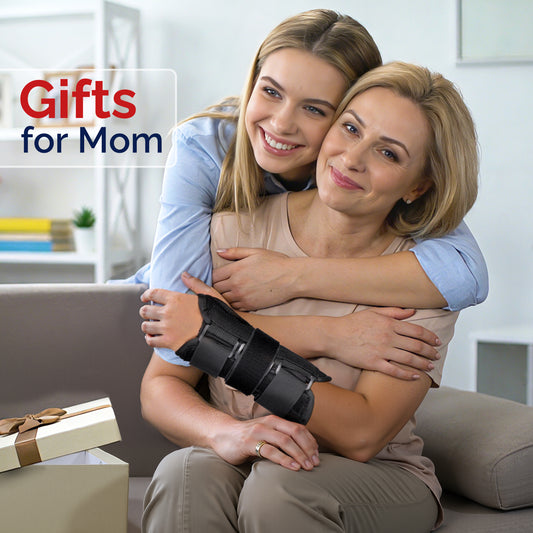


For years, the standard response to wrist pain has been to strap on a brace—treating it as a quick, passive fix. But what if that dependence is actually preventing your wrist from healing properly?
The right support does more than prop up the joint—it facilitates a return to self-sufficiency. Think of it not as a crutch, but as a coach: a wrist brace for tendonitis that helps you rebuild strength from the inside out.
The Anatomy of Support: Materials and Mindset
- Material Intelligence: Compressive synthetics (like neoprene or spandex blends) offer an active hug that boosts blood flow and joint awareness. Strategic padding molds to your anatomy, distributing pressure precisely. Breathable, moisture-wicking layers keep support consistent and comfortable for all-day wear.
- Design Logic: Form Follows Function: An 8-figure strap system allows dynamic, customizable support for lifting or sports. A simple pull-on sleeve provides uniform compression for tasks like typing. Your activity—not the severity of pain alone—should guide this choice.
- The Core Principle: A Tool, Not a Crutch: Any brace is a temporary aid. Its highest purpose is to enable safe movement while you actively strengthen the wrist. The goal is to build innate resilience, making the brace itself gradually obsolete.
The Right Fit: Between Support and Comfort
The strongest support often brings the greatest restriction. Maximum immobilization may soothe acute pain but can promote stiffness and dependence. The best wrist brace for tendonitis offers enough support to protect, but enough freedom to engage and ultimately strengthen.
Life Needs Support Too: Your Brace as a Life Tool
The best wrist brace provides adaptable, not rigid, support—and so should our life systems. They should protect us from crashing, but still allow us to move and grow. True resilience comes from intelligent support, followed by safe, guided exposure to stress.
Find Your Smart Support
Ask yourself: Do I need gentle all-day support or firm stability for specific activities? Your answer points to your best fit.

Your Wrist, Your Rules: A Practical Finish
Finding the right wrist brace is more than a purchase; it’s a personal agreement with your body. A good brace offers the protected freedom to move, heal, and ultimately return to your life stronger.
Your Quick Self-Assessment Guide:
Pain & Purpose: Is my main need to manage aching during repetitive tasks or to get firm stability for dynamic loads?
Activity Level: Will I wear this mostly for all-day, low-key support or for specific, high-intensity sessions?
Support Style: Do I need adjustable, targeted compression (like straps) or consistent, gentle containment (like a sleeve)?
Explore FEATOL Wrist Brace on FEATOL.com
FEATOL Voice
“It’s thin, breathable, and the gentle pressure constantly reminds me to keep my wrist in a better position. For me, it works more like a ‘posture coach’—and it works really well.”
— Jamie S., 34, Data Analyst, Idaho
“I can adjust the straps myself—I dial it in tighter for driving and keep it looser for typing. It let me safely ease back into using my wrist and rebuild my confidence.”
— Taylor M., 34, Teacher, Austin

FAQs
-
Does a wrist brace help tendonitis?
Yes. A good wrist brace for tendonitis stabilizes the joint and reduces strain on the tendon, allowing it to rest even during light activity. -
How do I choose the best wrist brace?
Match the brace to your activity. For all-day wear, choose a light, breathable sleeve. For lifting or sports, pick one with adjustable straps. -
Can I wear a brace all day?
Not constantly. Wear it during tasks that strain your wrist, but take regular breaks to move and stretch. -
Will my wrist become weak from using a brace?
Only if you over-rely on it. Use your wrist brace as support while you actively do strengthening exercises. -
When will I see improvement?
With consistent use, many people feel less pain within 1–2 weeks. Full recovery requires combining brace use with rest and rehabilitation.


